
Ramps and Rails
Ramps & Rails home repair
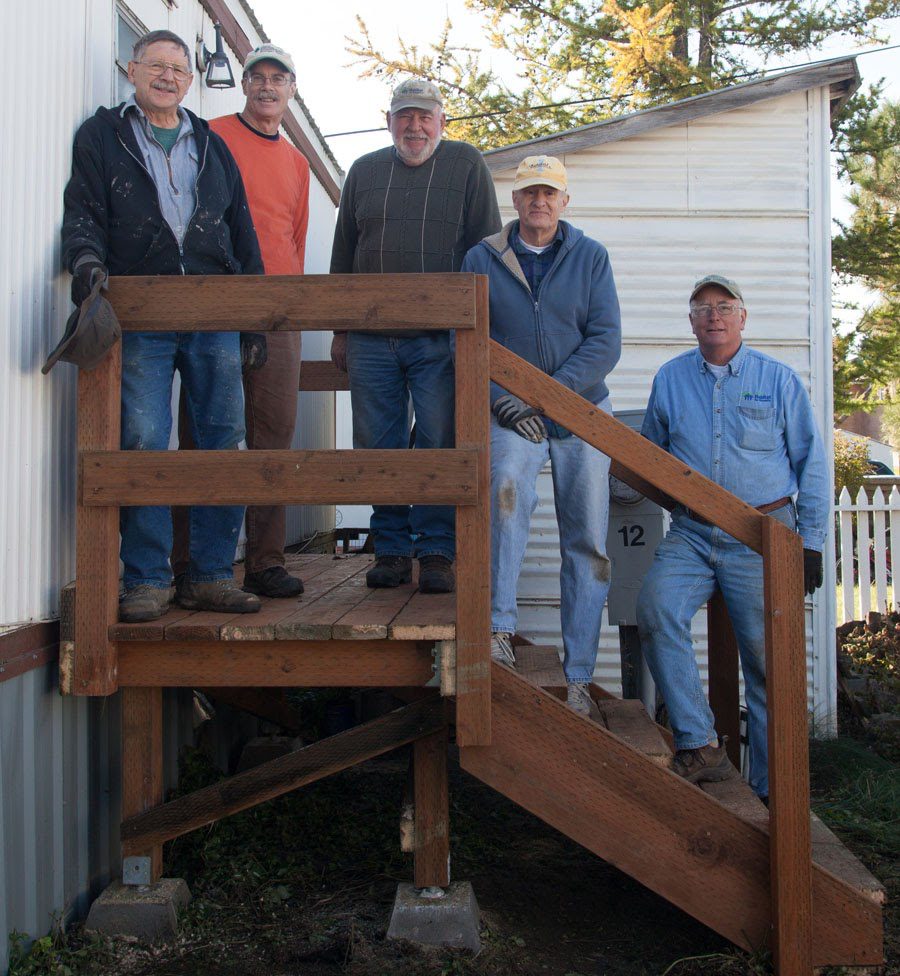
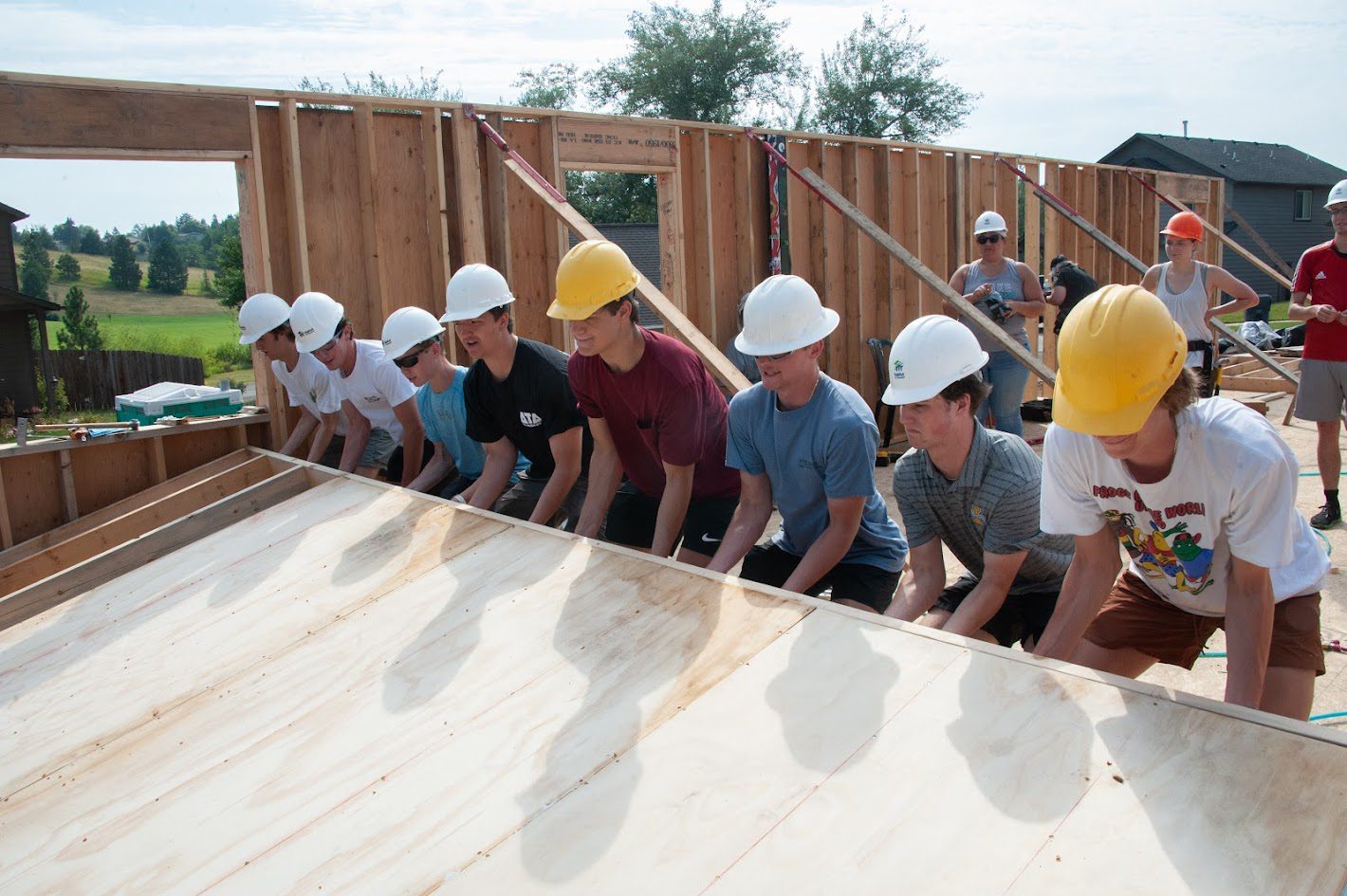
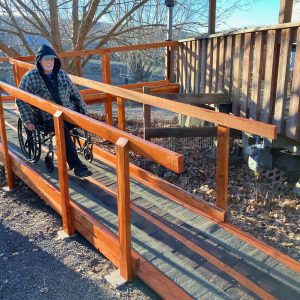
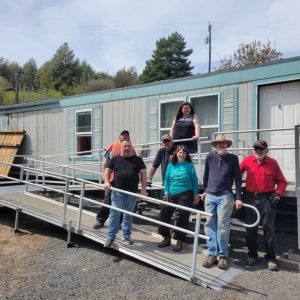
Volunteer crews build and repair ramps, steps, decks, and railings for very low to low income neighbors across Latah and Whitman Counties.
What crews can help with
- Wheelchair ramps, installed or repaired
- Steps and stairways
- Decks and porches
- Railings and grab points outdoors
Outside the program
- Interior remodeling or repairs
- Roofs, plumbing, or electrical work that requires a licensed contractor
Work is exterior only. The office can help point you toward other local resources when a project does not fit.
Aluminum ramps are issued at no cost and simply returned when they are no longer needed, so one ramp keeps serving the community. An average ramp costs about $2,500, lasts about ten years, and serves about five households.
Since launching in 2013, the repair program has completed more than 218 projects serving 364 neighbors, and crews added 50 more Ramps and Rails projects in 2024 alone.
The program works alongside the Moscow Central Lions Club, United Way of Whitman County, and the Disability Action Center to reach neighbors who need it.
How to get help
The inquiry form starts the process.
- 1Fill out the Ramps & Rails inquiry form
If you cannot use the form online, call the Habitat office at (208) 883-8502 and staff will help you.
- 2Habitat calls you about the project
Staff talk through what you need and whether the program can help.
- 3A site visit is scheduled
All the work is on the outside of the home, so you do not have to be there. Do tell Habitat about anything on site that matters, such as gate codes or dogs.
- 4If accepted, you sign a partnership agreement
A Partnership Agreement and Scope of Work form defines the project and the terms of the partnership.
- 5Volunteer crews build it
Ramps are provided at no cost, with the expectation that they come back to Habitat when they are no longer needed.
You may still qualify if you rent. Most projects are for people who own their home, mobile home, or dwelling, but Habitat has completed projects for renters with the landlord’s permission. The program focuses on low and very low income residents of Latah and Whitman Counties, and Habitat has worked with others on a case-by-case basis, including requests from adjacent counties without their own Habitat program. If you are not sure whether you qualify, submit the form or call and ask.
The program covers accessibility work: wheelchair ramps, steps, porches, and railings, including vehicle wheelchair ramps. It does not cover interior projects or work requiring a licensed contractor, such as roofing, plumbing, or electrical. Palouse Habitat adheres to federal fair housing policy, considers all applications, and does not discriminate based on race, color, religion, sex, handicap, family status, or national origin. It is a Christian ministry, but there is no requirement to take part in any religious activity or belief to use this program.
Program FAQs
Ramps & Rails questions
Do I have to own a home to qualify?
Most projects cover homes, mobile homes, or dwellings where the person owns the home. Palouse Habitat has completed projects for renters, but permission from the landlord is required. Be prepared to provide the homeowner’s name, contact information, and relationship to you.
Do you only work on homes?
Projects mostly cover homes, mobile homes, apartments, or condominiums. The program has also worked on vehicle wheelchair ramps.
Do you do other work besides ramps?
Ramps & Rails focuses on accessibility issues including wheelchair ramps, steps, porches, and railings. Crews do not cross the threshold for interior projects or perform work requiring a licensed contractor, including roofs, plumbing, or electrical work. Some structures, such as mobile homes, can have specific requirements for work on or near them.
Do I have to be low income to qualify?
The program focuses on safe accessibility for low- and very low-income residents, but Palouse Habitat has worked with others case by case. Staff will review the requirements and your needs after the inquiry form is submitted. Call (208) 883-8502 with questions about what counts as income.
Are there other requirements to qualify?
Palouse Habitat adheres to federal fair housing policy, considers all applications, and does not discriminate based on race, color, religion, sex, handicap, family status, or national origin. Palouse Habitat is a Christian ministry, but participation in religious activities or beliefs is not required to use this program.
What geographic areas does the program cover?
The program serves Latah and Whitman counties. Completed projects include Bovill, Deary, Helmer, Kendrick, Moscow, Potlatch, Princeton, and Viola in Idaho, and Endicott, Colfax, Ferdinand, Garfield, Malden, Palouse, Pullman, Rosalia, St. John, and Tekoa in Washington. Requests from adjacent counties without a Habitat program are considered case by case.
How long will it take to get the project done?
Include any deadline or timeframe in the inquiry. Depending on volunteers and materials, crews have completed urgent projects that allowed people to leave the hospital after an injury or health incident, but the program relies mostly on volunteers and cannot guarantee a timeline.
How do I know how much the project will cost me?
Ramp components were purchased through private gifts and grants. Ramps are available at no cost and must be returned when no longer needed. Recipients who are not low-income are expected to help cover installation or future materials. Sweat equity can include recruiting family members, providing lunch, or helping with installation when able.
Can I request help for someone else?
Yes. Initial inquiries often come from family, friends, neighbors, care providers, and others. The form asks for information about both the recipient and the person making the inquiry.
When will I hear back?
Expect a phone call within 2 to 4 days. If you do not hear from Palouse Habitat, call (208) 883-8502. The call may come from a number you do not recognize, so check voicemail as well.
What happens when I no longer need the ramp?
Call (208) 883-8502. Many ramp components can be reused, and the Ramps & Rails team will remove the ramp as soon as the team is available.
Past projects
Callie and Ryan’s Ramps & Rails story
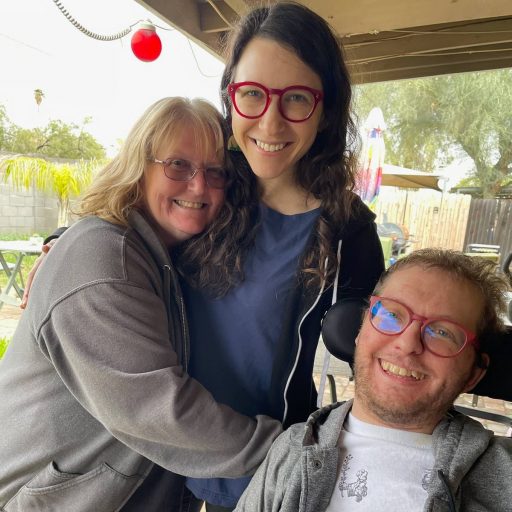
Callie, a professor at Washington State University, moved to Pullman while her boyfriend, Kyle, who has Spinal Muscular Atrophy and uses a powerchair, had to remain elsewhere because accessible housing was limited. They could not find anyone to build a ramp for less than $8,000, which was outside their budget alongside the cost of a wheelchair-accessible vehicle. Palouse Habitat’s Ramps & Rails Crew and the Moscow Central Lions Club built the ramp, allowing Kyle to move to Pullman sooner than expected.
“Thank you, Palouse Habitat, for taking your time and expertise to build the railing for my front steps. I’m so grateful to have this new safety feature at my home. I’ve been enjoying ‘running’ up and down the steps and using my railing. I think Habitat is a wonderful program, thank you.”Margretta, Ramps & Rails recipient

Support Ramps & Rails
Help purchase ramp components and building materials.
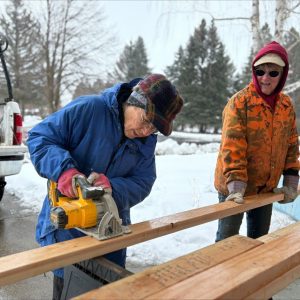
On average, each aluminum ramp costs $2,500, is expected to last ten years, and serves about five households. The available aluminum supply does not meet demand, so crews also use a modular wooden ramp system. Gifts help purchase aluminum ramps, lumber, and other materials.
Thank you to our partners




More resources
Related home repair pages
Program details, volunteer opportunities, results, and contact information.
Ramps and Rails program details
Read the full program description and application guidance.
Open resourceVolunteer on accessibility work
See project-based and other volunteer roles that support local neighbors.
Open resourceProject map
See the wider footprint of Palouse Habitat homes and repair projects.
Open resourceProgram results
Review completed projects, volunteer hours, grants, and annual impact.
Open resourceContact the program team
Call, email, mail, or visit the office for help starting the process.
Open resource